One Year After Assad’s Fall: Syria Marks National Day Amid Renewed Optimism and Official Tribute to the Nation’s Fallen Journalists
Written by: Ahmad El Khalaf
- Senior News Producer & War Journalist
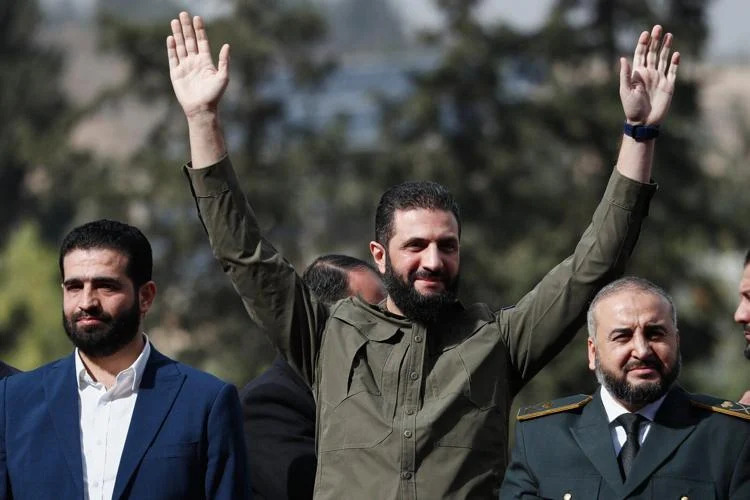
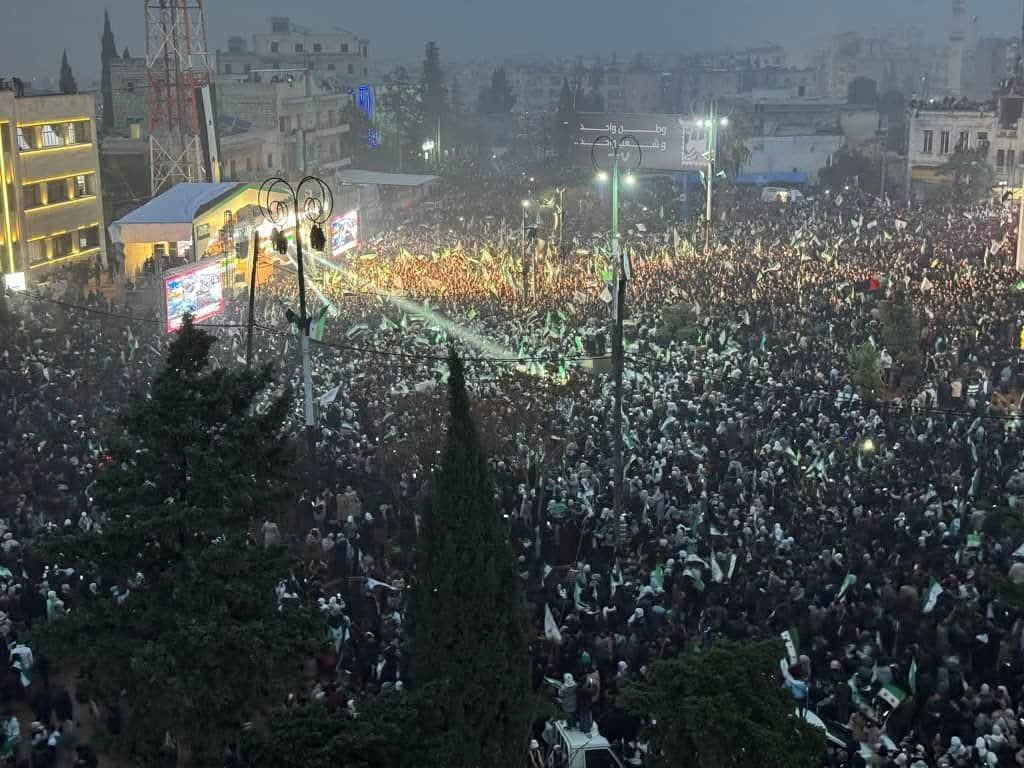
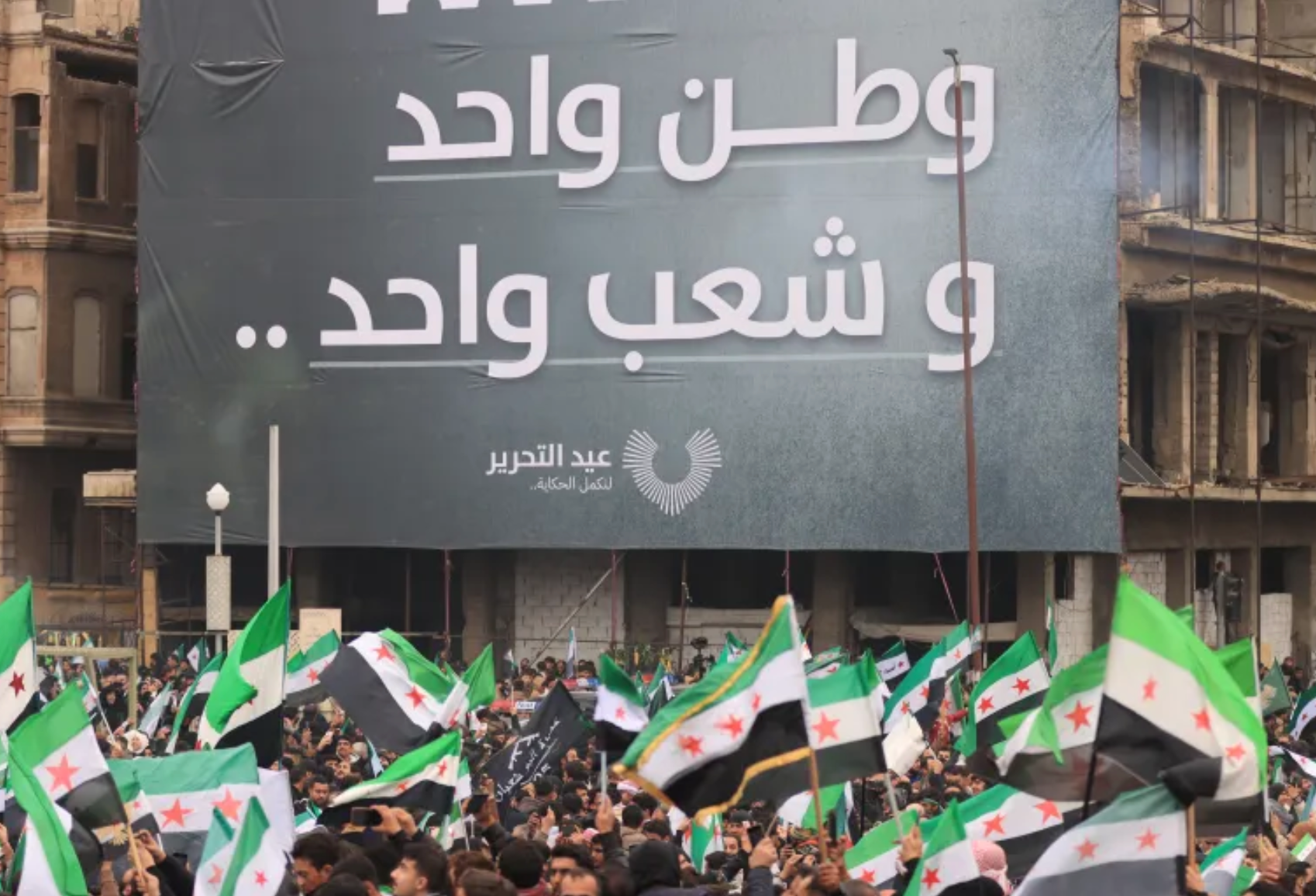
One year after the political collapse of Bashar al-Assad’s long-standing regime, Syria yesterday marked its National Day with an unprecedented outpouring of public celebration. Tens of millions of Syrians took to the streets across all provinces, while hundreds of thousands gathered at Syrian embassies around the world—from Doha to London, Istanbul to Washington—in displays of unity not witnessed in generations. The scenes, carried live across regional and international broadcasters, symbolised a nation attempting to reclaim its identity after more than a decade of devastation.
The central commemorative event in Idlib saw Syria’s Minister of Information, Dr Hamza al-Mustafa, deliver a landmark speech honouring the sacrifices of journalists and media workers who, in the view of the new Syrian administration, “carried the revolution on their shoulders, documented its truths, and paid with their lives for the future of a free Syria.”
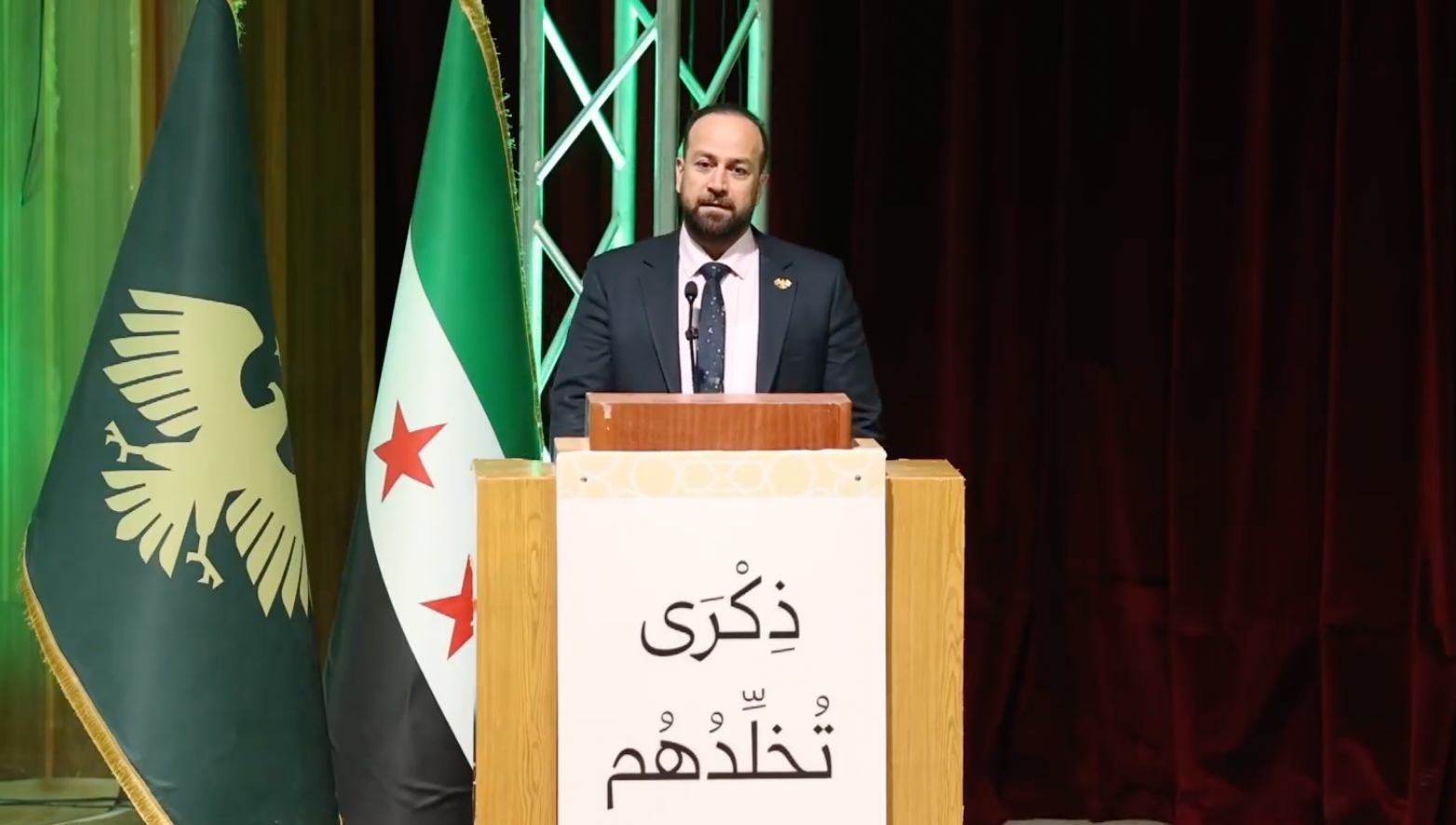
Speaking before an audience of government officials, families of the deceased, and representatives of international partners, al-Mustafa characterised the events of the revolution and the subsequent Deterrence of Aggression campaign as an “epic in every sense of the word”—a struggle that surpassed the boundaries of conventional military confrontation and rested heavily on the courage of those who documented it.
He described the early days of media work during the conflict as a period marked by intense pressure, scepticism, and the constant threat of deadly reprisals. “Those who held their cameras and pens at the outset,” he said, “stood as though grasping burning embers. They challenged not only the aggression on the ground, but also the doubting narratives of international observers, analysts, and research centres that had long predicted the regime’s permanence.”
Al-Mustafa’s remarks came as part of a broader ceremony dedicated to honouring the hundreds of journalists who lost their lives over the course of the 13-year conflict. According to figures cited by the transitional government, more than 700 media workers have been killed since the uprising began in 2011—individuals who, in the government’s framing, formed the frontline of truth-telling during Syria’s darkest years.
Their memory, he stressed, “must be immortalised in our institutions, our streets, and our cultural memory,” calling for the naming of public landmarks after the fallen and announcing ongoing coordination between the Ministry of Information and the Ministry of Social Affairs to establish long-term support structures for the families of deceased journalists, both morally and financially.
A Nation Rebuilding from the Ashes
The National Day celebrations also carried a sombre undertone: a collective acknowledgement of the extraordinary human and structural damage sustained during Assad’s rule. Transitional authorities, humanitarian organisations, and international observers maintain that the former regime’s military and security operations led to the deaths of approximately two million Syrians, along with the destruction of major cities, the displacement of millions more, and the near-total collapse of infrastructure across vast swathes of the country. These figures, though contested in certain quarters, form a core part of the narrative advanced by Syria’s post-Assad leadership as it seeks to articulate the scale of the country’s recovery challenge.
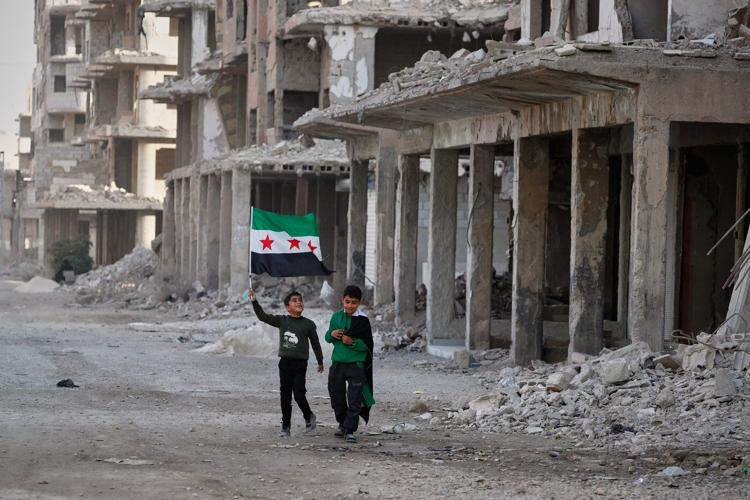
Yet the tone of the new administration—reflected in yesterday’s ceremonies—leans firmly toward reconstruction, reconciliation, and international re-engagement. President Ahmad al-Sharaa, widely viewed as a consensus figure within the post-conflict political landscape, has positioned his government as one driven by technocratic reform and institutional rebuilding.
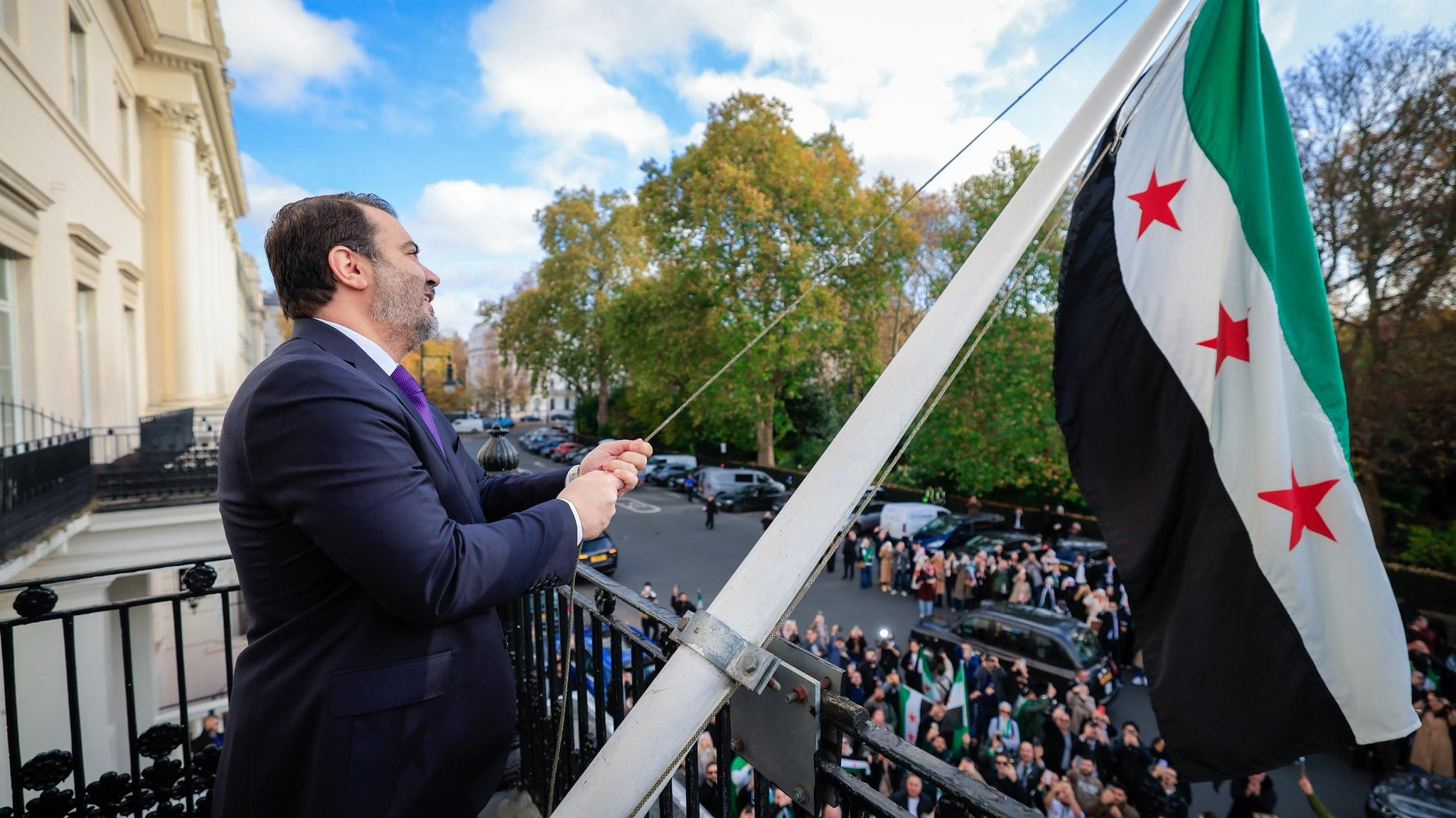
Alongside Al-Sharaa, Foreign Minister Asaad al-Shaibani has spearheaded an ambitious diplomatic campaign aimed at reintegrating Syria into the global community. His ministry has spent the past year strengthening ties with regional partners including Qatar, Turkey, Saudi Arabia, and forging renewed cooperation with Western states such as the United States and the United Kingdom, as well as key multilateral institutions. The United Nations has taken on an increasingly coordinated role in supporting reconstruction efforts, ranging from humanitarian assistance to infrastructural recovery and electoral planning.
These diplomatic initiatives have dovetailed with internal reforms across numerous ministries, each tasked with restoring basic services, rebuilding governance structures, and re-establishing public trust. The pace of these reforms has been widely acknowledged—both domestically and internationally—as a marked departure from past practices of centralised repression and administrative stagnation.
Deterrence of Aggression: A Pivotal Turning Point
At the heart of al-Mustafa’s address was a detailed reflection on the Deterrence of Aggression campaign, viewed by the new administration as a decisive moment in the battle for Syria’s future. He described the campaign as one that not only defied political expectations but fundamentally reshaped the strategic landscape. “Research centres, intelligence agencies, and international observers repeatedly insisted that Assad’s rule was immovable,” he noted. “But this epic overturned every assumption.”
Crucially, al-Mustafa stressed that such turning points are not forged solely through military action. “Epics are shaped by exceptional individuals,” he said, “not only through strength and strategy, but through unwavering commitment to truth, documentation, and public awareness.”
This framing underscores the administration’s broader effort to elevate journalism as a cornerstone of national rebuilding—an attempt to shift Syria away from decades of state-controlled media and toward an information environment characterised by openness and accountability.
A New National Narrative
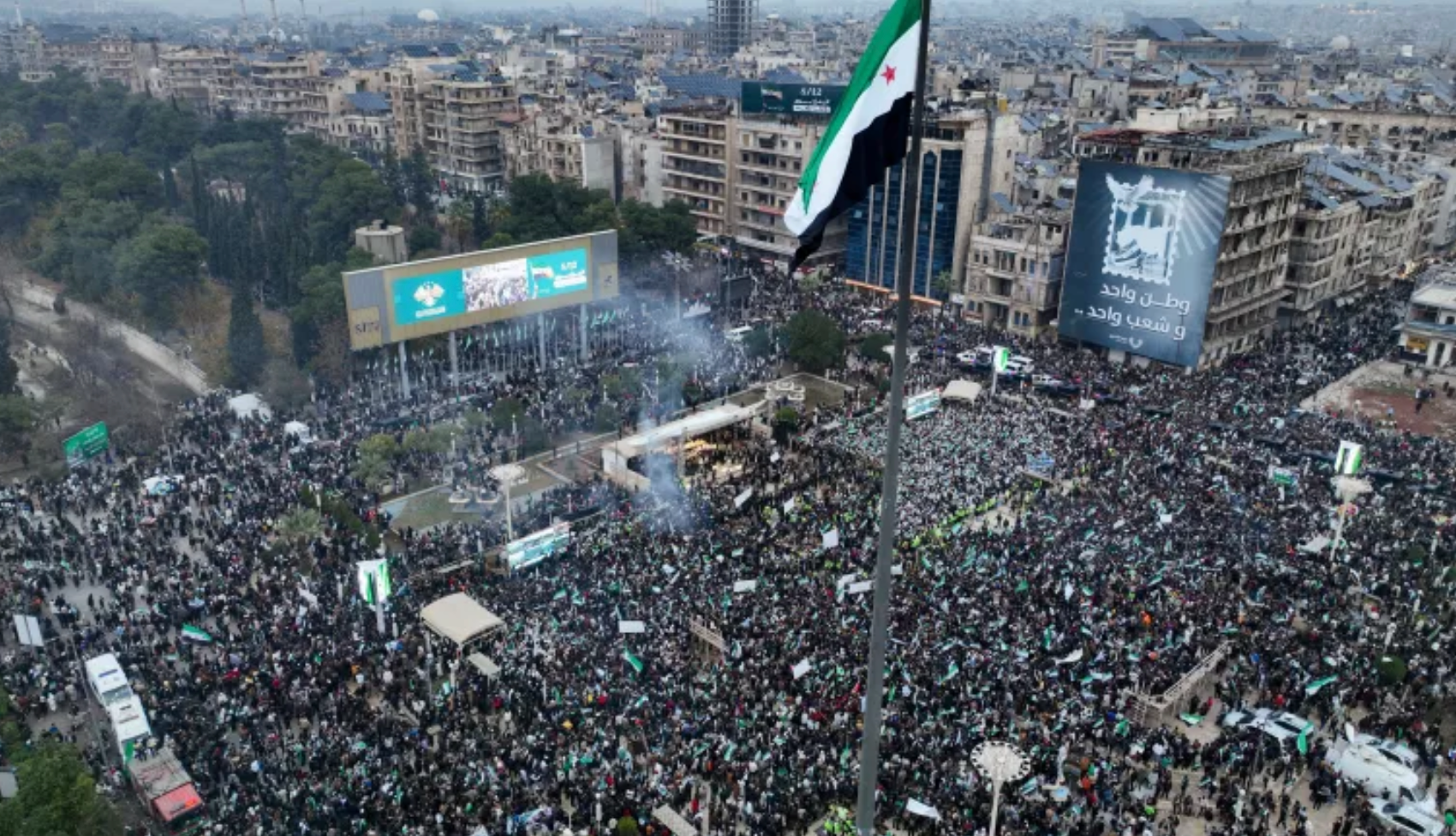
The scale of yesterday’s nationwide and global celebrations signalled the emergence of a new national story—one centred on resilience, collective sacrifice, and the promise of reconstruction. For many Syrians, this year’s National Day was their first opportunity in over a decade to celebrate without fear, censorship, or state intimidation.
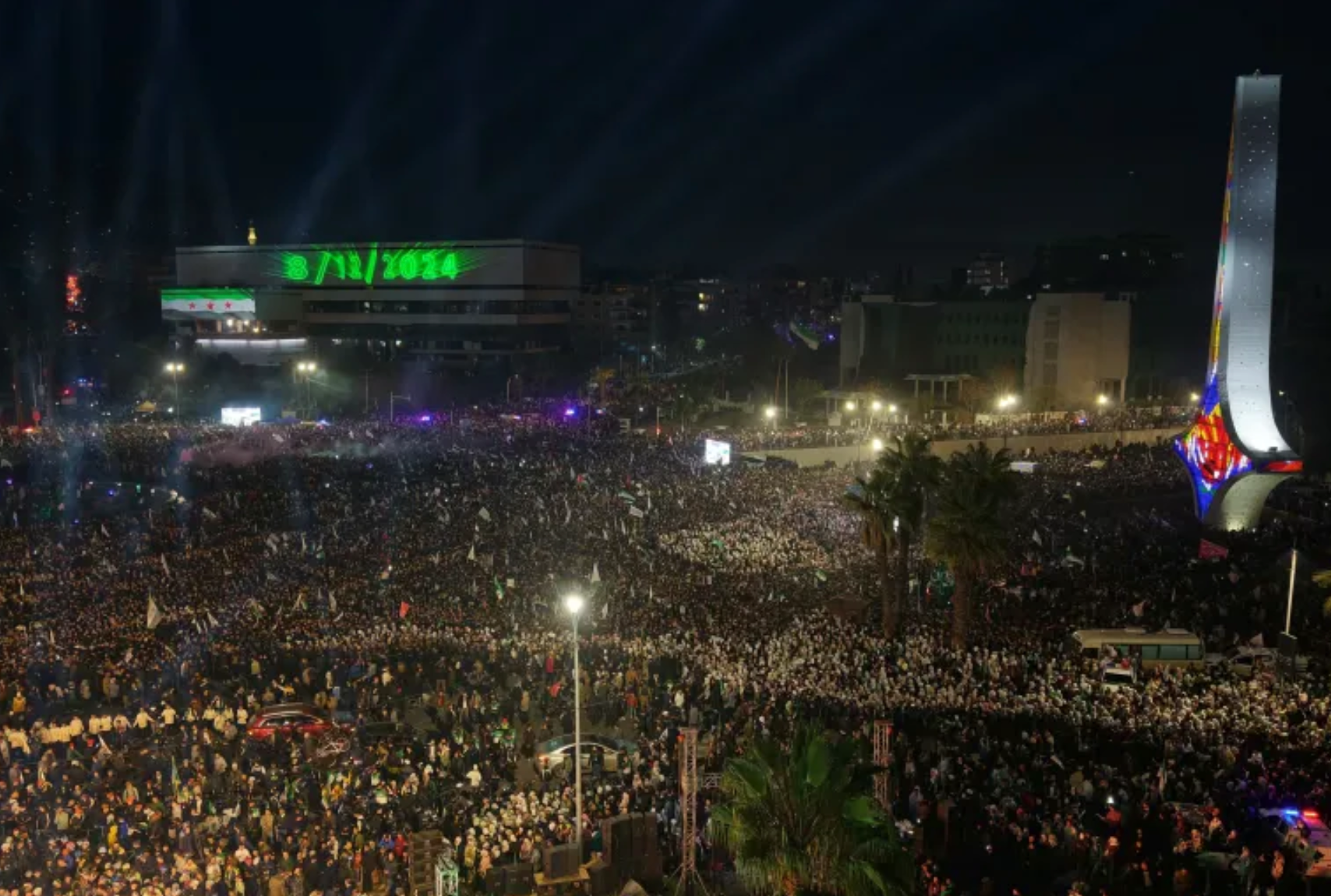
The images circulating from Damascus, Aleppo, Idlib, Raqqa, Homs, and Lattakia showed streets overflowing with people waving the national flag adopted by the new government, singing patriotic songs, and honouring those who lost their lives throughout the conflict.
In diaspora communities—from Berlin to Amman to Toronto—mass gatherings outside Syrian embassies reflected a similar sense of reclaimed identity. For a population long fractured by war and displacement, the celebrations marked a moment of collective catharsis.
Looking Forward
As Syria enters its second year under a transitional democratic leadership, the road ahead remains daunting. Rebuilding a nation shattered by war, displacement, and economic collapse will take years—perhaps decades. Yet the tone set by the new government, and the sweeping public mobilisation seen on National Day, suggests that Syrians are determined to move forward.
In the words of Dr Hamza al-Mustafa: “Our martyrs offered their lives so that Syria could live again. Our duty now is to build a country worthy of their sacrifice.”

Post a comment